Bridgette Bogle
Bad Boundaries
July 3 - August 30 2026
Lower Gallery East
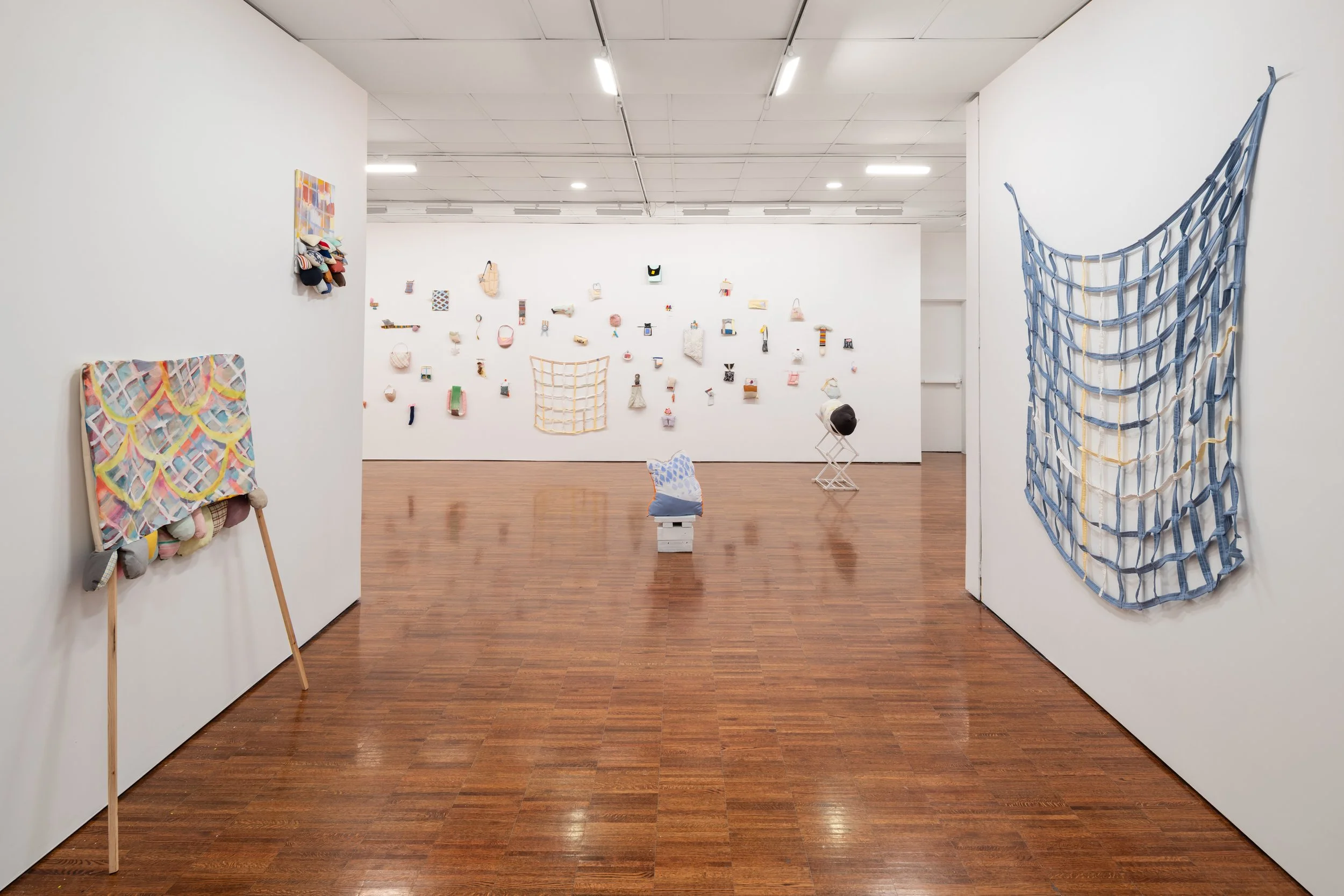
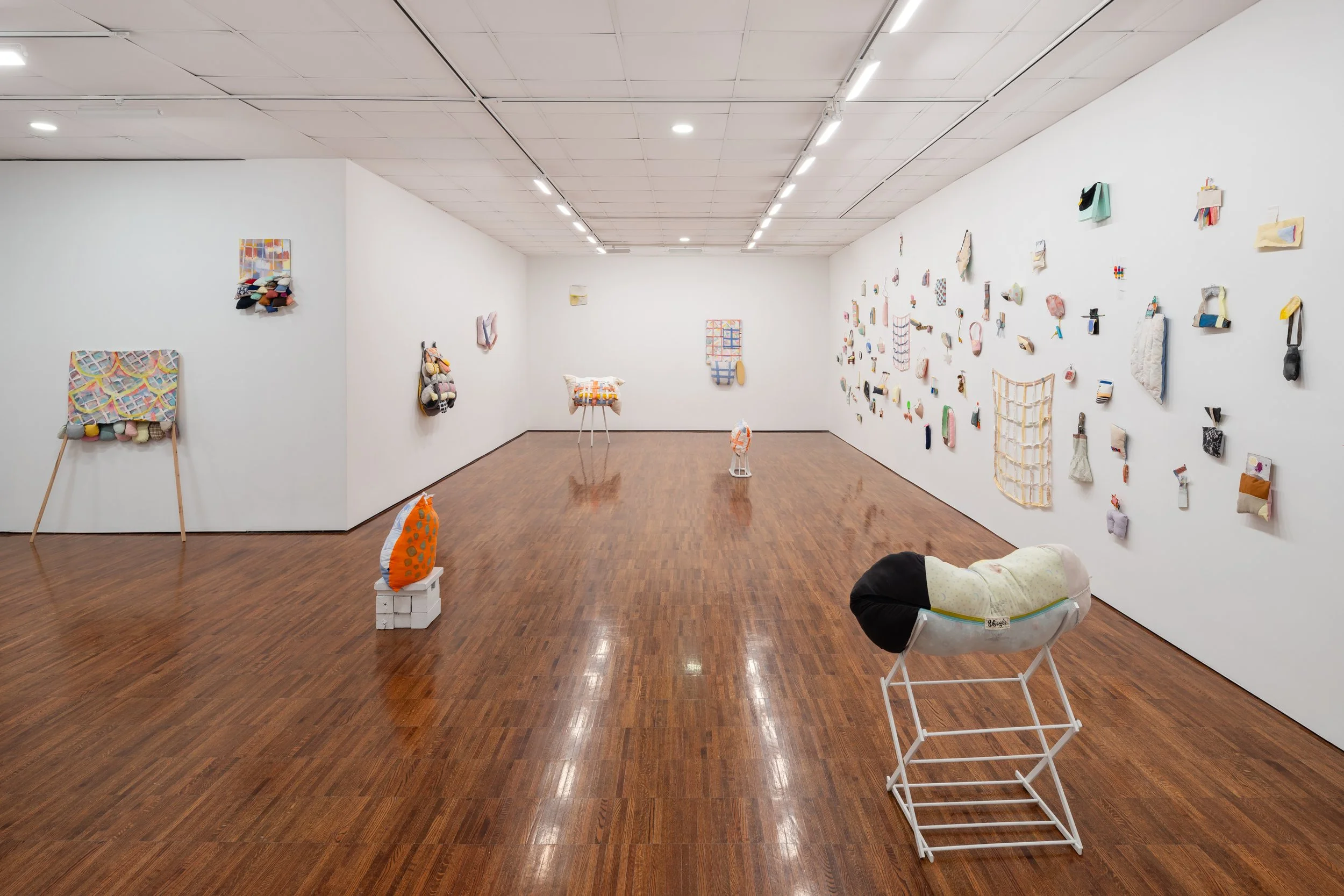
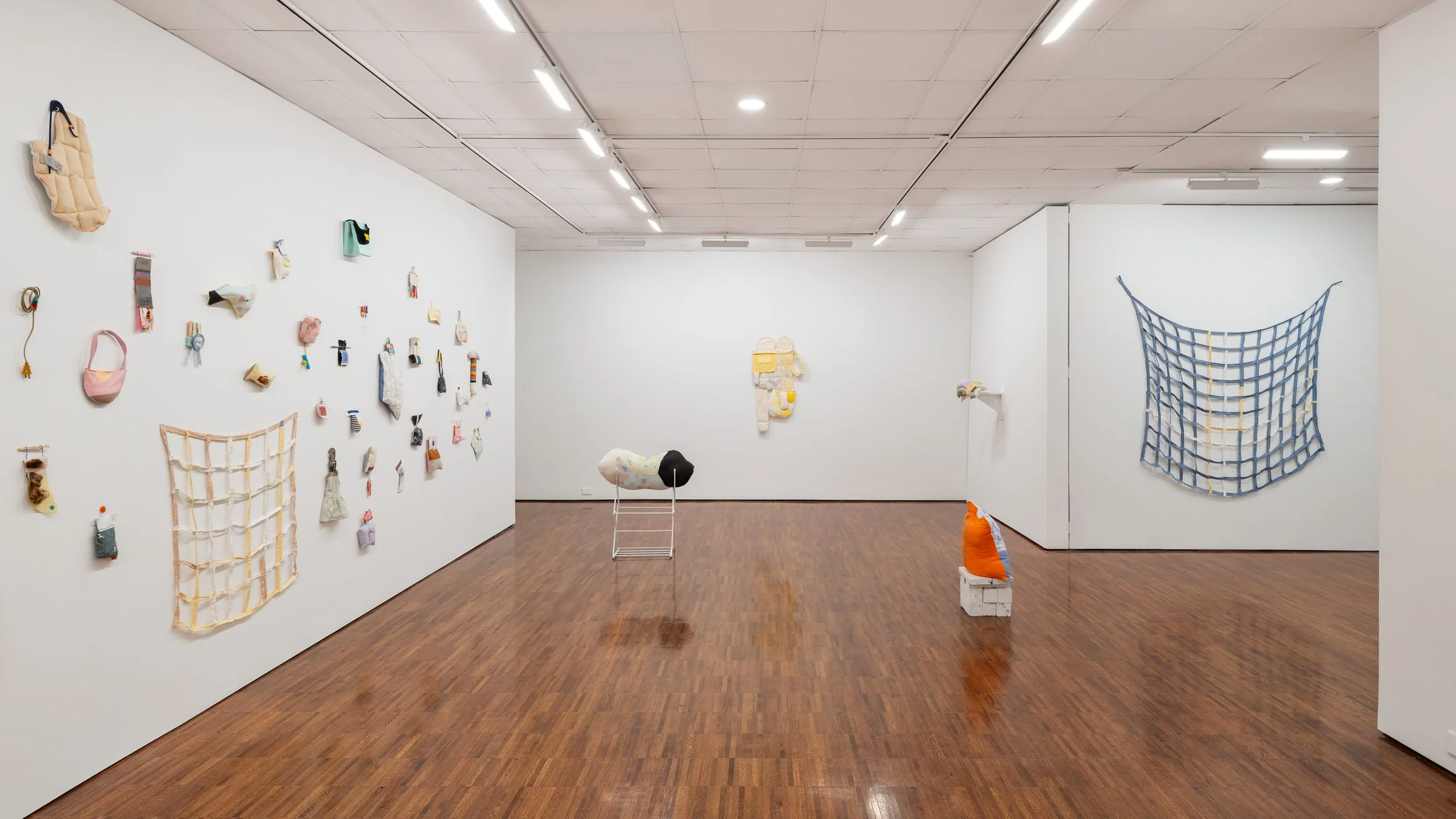
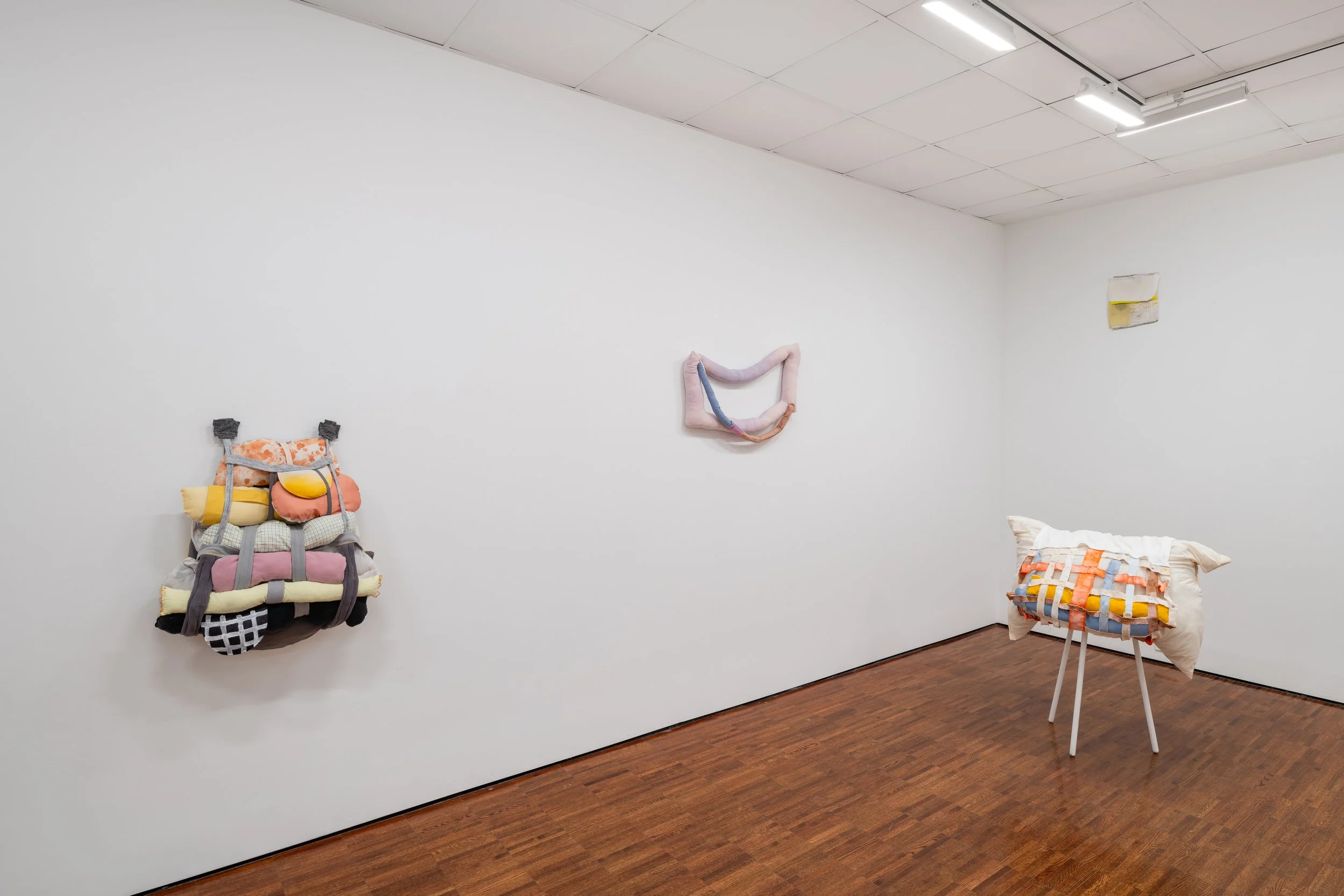
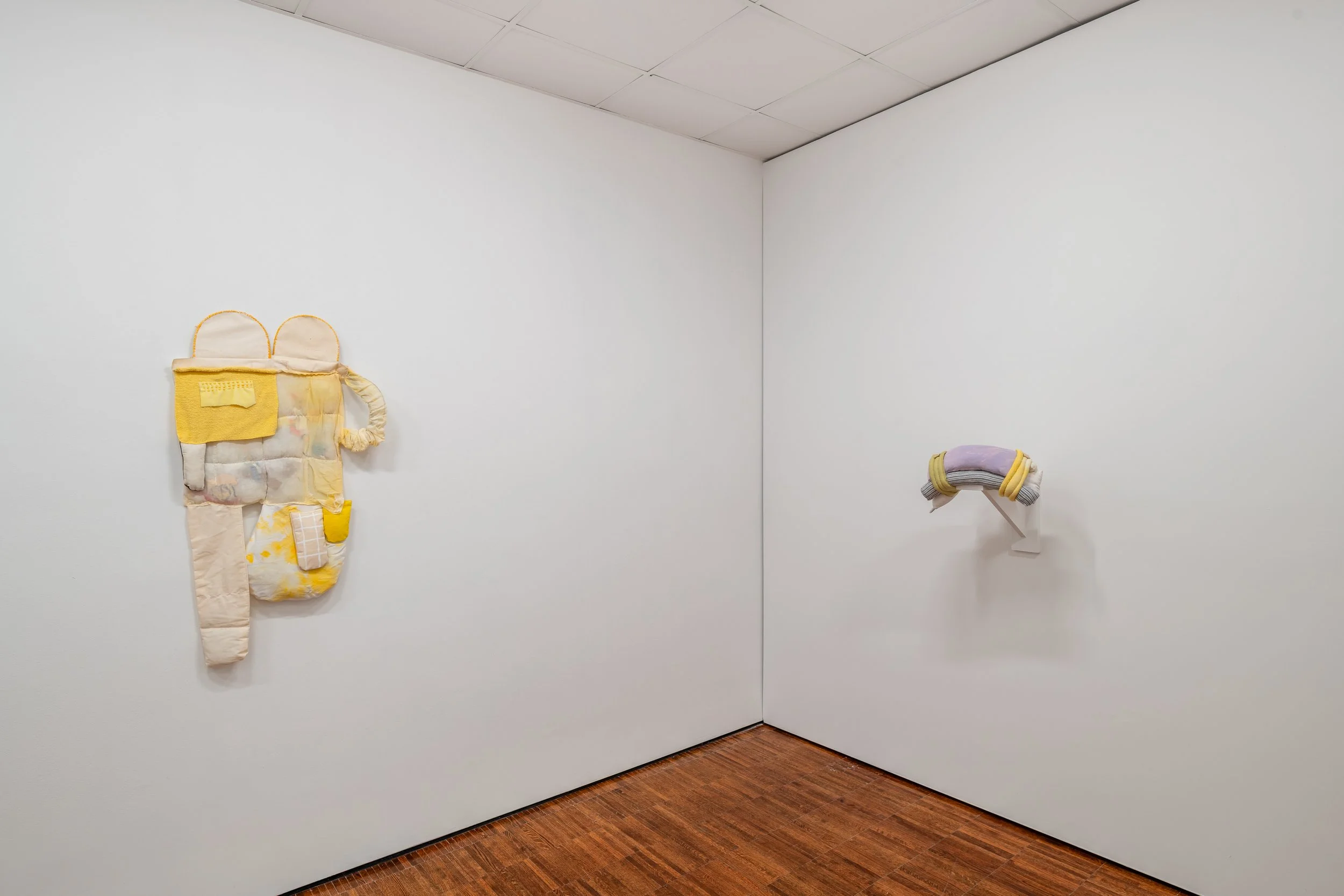
Bridgette Boglestretches, pads, paints, and secures a variety of domestic materials into three-dimensional works that are sometimes free-standing and sometimes displayed on the wall. These soft pieces echo the pliable shapes of the human body, while also referencing objects of household care and coziness like cushions and bedding. Pillows, like the maternal body, are associated with softness and comfort but also signify ideas of overabundance, suffocation, and smothering. In these works, fabric stands in as a metaphor for motherhood and family life. Many of these pieces suggest aspects of Bogle’s own body and experience.
A broader implication in Bogle’s work connects with ideas of craft, ingenuity, and repurposing done primarily by women within the anonymous context of family life and “women’s work” throughout history. But Bogle’s practice also draws from more recent “craft” traditions, including the artists of Gee’s Bend and others such as Ed Rossbach, Rosemarie Trockel, Andrea Zittel, and Igshaan Adams. Bogle is part a lineage of artists who use personal and signature approaches to textiles and fabrics to bring to light issues of labor and identity that are intertwined with modern textile production. Her work illustrates that fabric and sewing are a quintessential link between lived experience and art.
The Exhibition takes its title from Lilly Scherlis’ essay Boundary Issues and, like the essay, explores the fallacies of traditional boundaries especially within the context of the contemporary American family and, even more specifically, with the context of ideas regarding contemporary American motherhood.
Bad Boundaries opens in the Weston lower gallery entry space with the large wall installation Dead Flowers, a web like conglomeration of hundreds of artificial grave flowers that had blown loose from burial sites in Dayton Ohio’s historic Woodlawn Cemetery. Bogle and her family started taking walks through the cemetery at the beginning of pandemic in 2020 and the gathering of these cheap, polyester fabric flowers became a meditative activity.
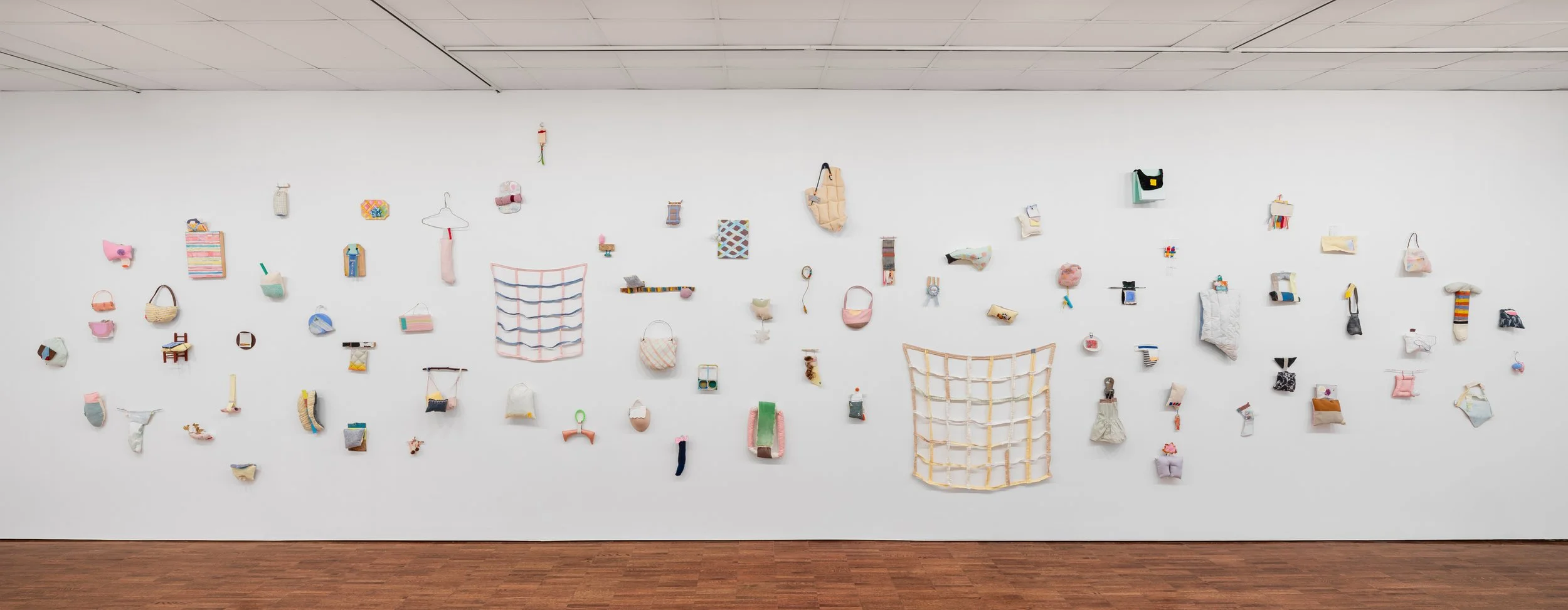
In the main gallery the multitudes of Dead Flowers is echoed in a work entitled Wall of Small Sculptures, 76 recently made small objects that envelop the aft wall of the gallery.
The objects withing the main gallery were all created between 2019 and 2026 and are largely made from fabrics and materials that her family has worn and outgrown, including baby blankets and plush toys, maternity clothing.